10 Reasons to Live in a Historical Home | Why Living in a Historical House is Great
When initial thoughts fill the mind about historical home ownership it seems like the idea of drafty money pits is the all-pervasive stereotype. People think of all the hard work involved, the expenses of maintenance, and all the what-ifs that could potentially go wrong. My husband and I were the opposite. We saw opportunity where others saw inconvenience. We saw the beauty where others saw problems. We have a vision and the dedication to preserve what once was.
It has now been over a year since we moved in and I can now say owning a historic home is one of the most rewarding challenges I have taken on so far. We were not scared off by the failed inspection reports nor did the well-meaning advice of others to run away from this house deter us. Instead, we became stronger in our convictions to prove people wrong. Piece by piece we are revealing the beauty and lifestyle we envisioned, for the home and our family.
After living in Europe for numerous years, I had become accustomed to the beauty of the older homes, by comparison to the 1700s canal house I lived in Amsterdam our house is a young maiden. One of the reasons I was slow to move back stateside was that I could not fathom living in a new-built personality-less house with no detail on the ceiling. Once you live with an ornate ceiling it changes you.. My husband was also used to older homes. He grew up in a farmhouse passed down for at least 4 generations. When he initially went into the basement which evoked a sense of dread in the sensible American man’s mind, he was positive about the condition compared to basements he had seen throughout his life.
There is a disclaimer however to historical home ownership. We made sure to know the history of our house. The original owner was a prominent business owner in the community, a multimillionaire at the time, he wanted to outfit his home with the best. He was a lumber baron specializing in windows and doors. We searched for a home that was initially built with quality in mind, and not skimping out on the details. From my learnings from the historical home community, this is crucial. There are NUMEROUS horror stories about historical home ownership where everything must be replaced and falls apart. Our home is not a standard 1920s farmhouse, which we were very conscious about. The original owner had a long-term vision, and he wanted to make sure he had the best. This coincides with point number 3, historical homes can be purchased for a great price, factoring in the time and cost of maintenance and repairs, but you must be smart with knowing which problems you are inheriting. We decided to take the risk. To gamble a little on our home, factoring in the history, the original build quality, and a little faith in the unknown.
Here is what I have learned about being a distinguished historical home caretaker.
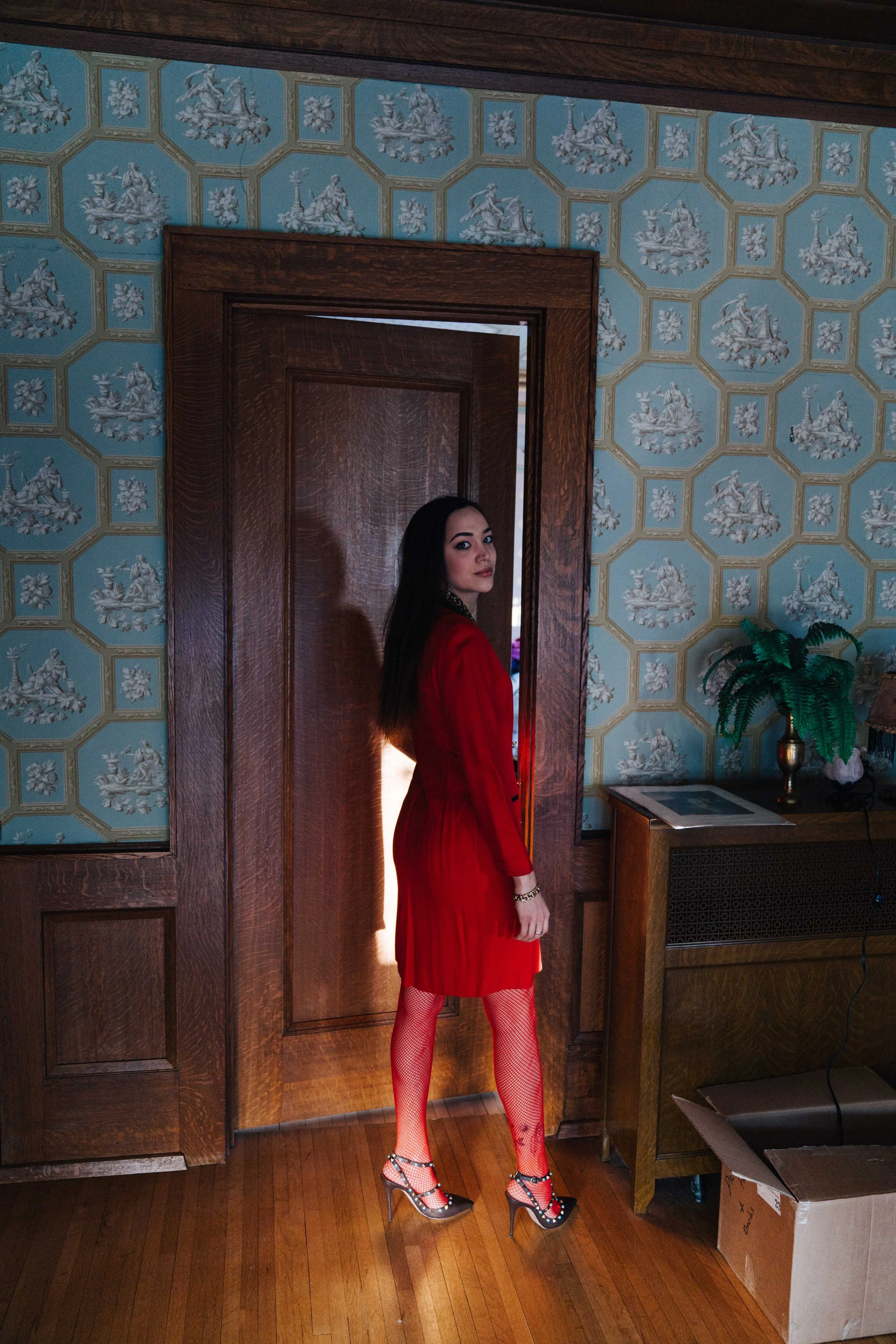
Wood Work, High Ceilings, Vintage Wallpaper
Can not get enough of all the details in the home
Build Quality
Thick walls, solid wood doors, high ceilings, grand stairwells, and spacious built-in closets. Historical houses have a solid feel that just does not translate into a modern home. With the increasing cost of labor, foreign imported materials, and cost-cutting it is extremely hard to replicate the solidity of an older home. Every day I marvel at a new facet discovered in the house for just how well-built it all is. There was an attention to detail combined with the pre-machinery handmade touch that just screams craftsmanship.
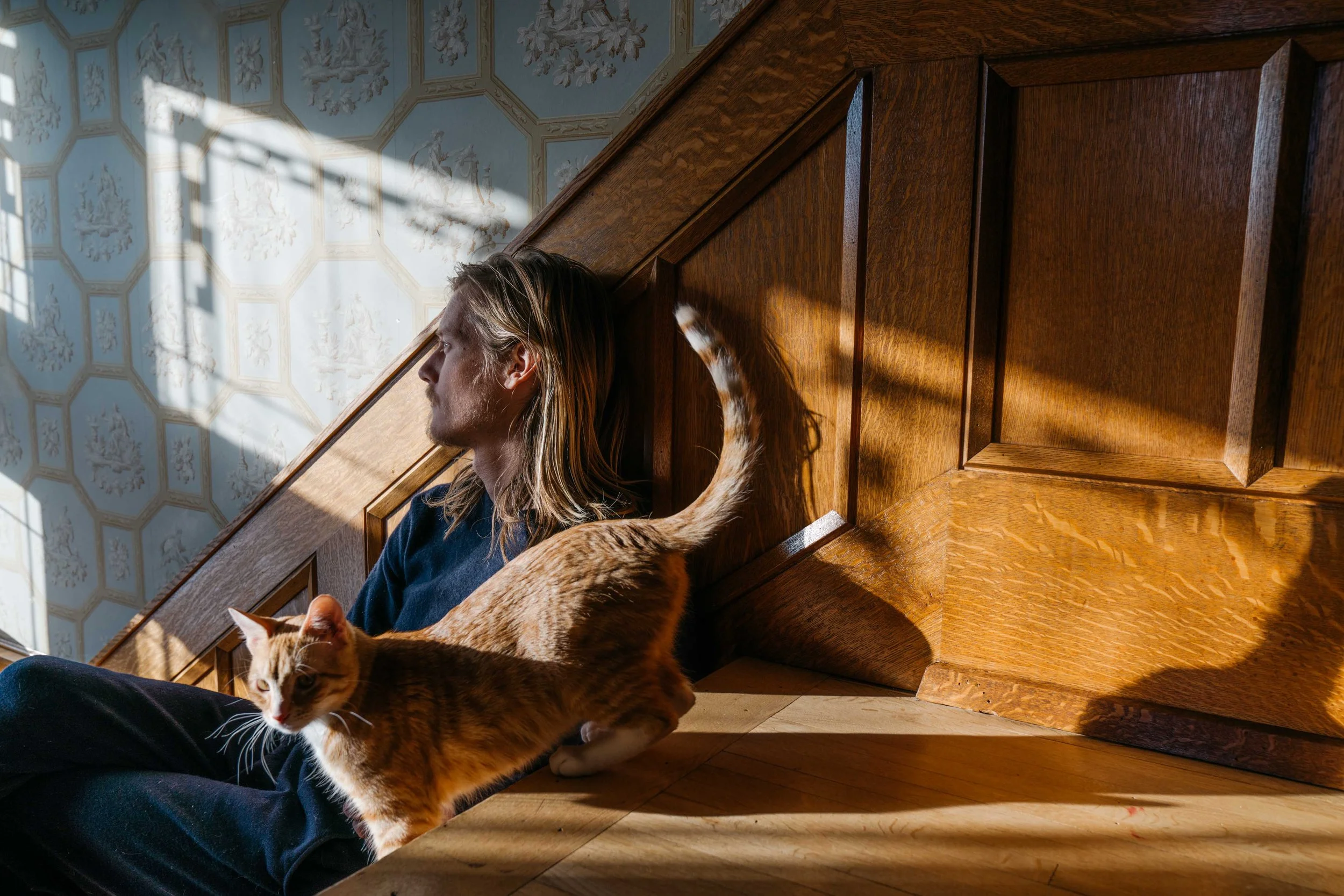
2. Sustainability
We are talking about real sustainability here. The entire house is made with natural materials. This is truly sustainable, everything is recyclable. This means we have the original wooden window frames. For example, instead of needing to purchase and replace all of a window frame, we were able to salvage most of a storm window and repair it by adding a new piece of wood. We are able to fix parts as needed. We still have some siding that needs to be fixed, but this involves replacing the wood as needed, versus vinyl siding, where once there is damage (I believe) the entire siding needs to be replaced. Additionally, vinyl is a synthetic material that ends up in a landfill, who knows how long it takes to degrade? Wood is natural, repairable as needed, and decomposes back to the earth. With our ever-increasing synthetic disposable society, I love seeing how homes were originally made with components that can be repaired as needed instead of completely replaced and swapped for the new “energy-efficient” man-made technology that eventually ends up in a landfill, and who knows how many chemicals were used in the production. The only downside to the storm windows is the dwindling amount of artisans with the technical knowledge of how to make them.
3. Price
This is a complex, dare I say, controversial topic. From my research, historical homes factoring in their square footage are less expensive than newer builds. It seems as if they are a harder sell since the average home buyer seems interested in turn-key move-in ready type homes. They are willing to pay for modern conveniences. They see the cost of heating, the cost and time of maintenance, and the constant work. I will admit, all of these things exist. There is daily work, and many things that need to be maintained, and replacing a roof does not exactly come cheap. BUT, I know how much new homes cost. I also know how expensive raw materials cost. The cost of lumber has gone up so much in the past years. An older home is already built, you have the bones, and the rest is extra to fix it up & maintain how you see fit.
Will new houses still be here 100 years from now? Does everything in a new home need to be totally replaced in the future? How many chemicals are in a new home or were used during the production of the materials?
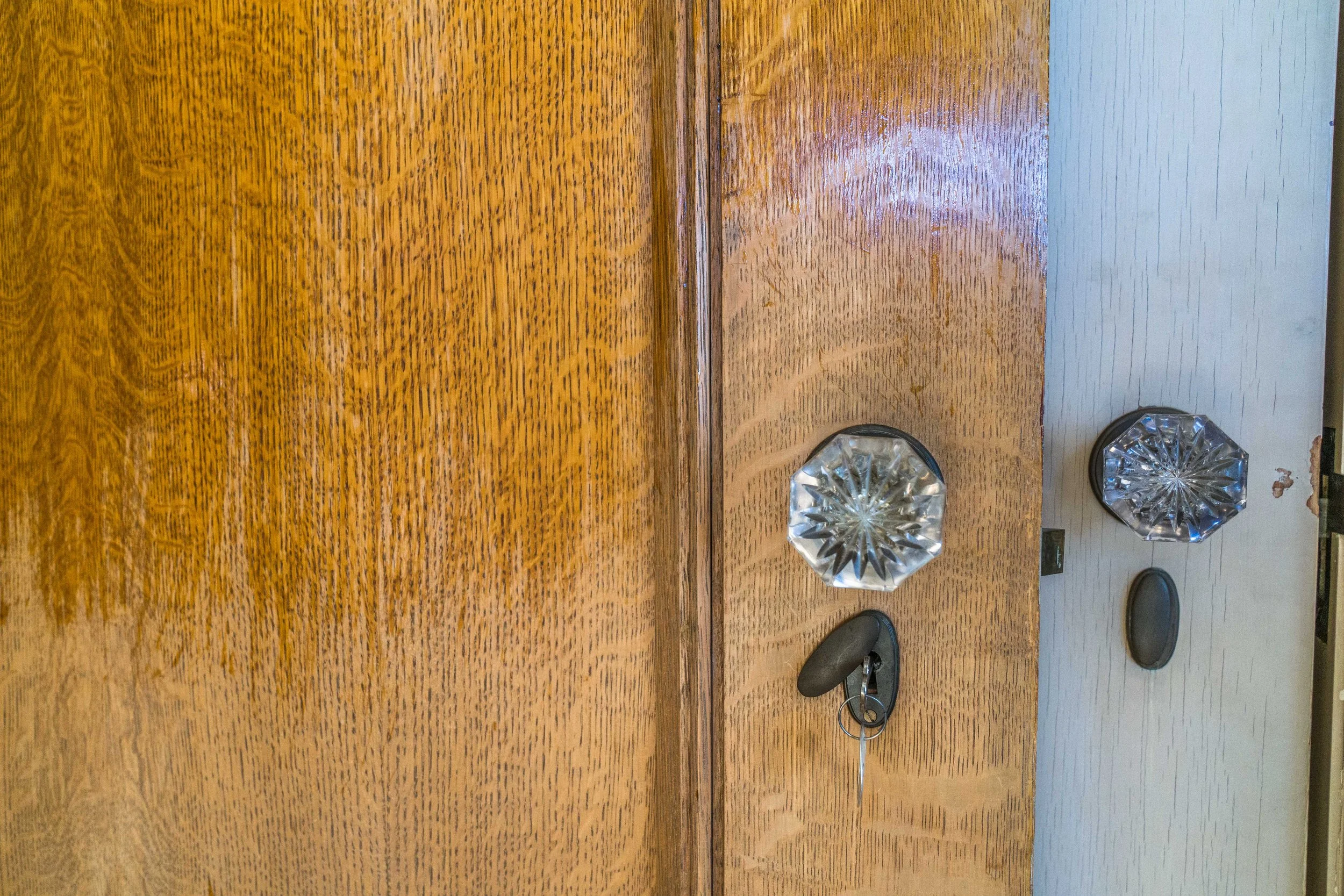
For me, the old-growth quartersawn oak paneling is priceless. Where could you find that now, let alone afford the entire house to be molded with it? How could you hire a craftsman to mill & design such a home? Yes, maybe I am a romantic, that values the details, but I do know that those little details such as copper-brass door knobs add up and in the end, it is a cost of maintenance for the one-of-a-kind home, or selecting convenience and standard.
For me, once you break it down, the quality of the home, and the quality of life gained is extremely challenging to value with a price. After all, prices on art seem to be subjective, this I have learned from watching hours of art auctions. Value is derived from what people believe something is worth. With historic homes what is for sale? The size? The beauty? The maintenance?
4. Beauty & Detail
Entering a historic home, there is definitely a wow factor. Everything from the grandeur of a stately entrance room to the small eccentric details excites the senses of all that enter. The beauty matches that of a museum and is a reminder of a bygone era. I believe in surrounding oneself with beauty. It is a personal philosophy, that I argue increases one’s happiness and uplifts the spirit. Being immersed in the beautiful cannot help but inspire, inspire greatness, brilliance, and perhaps motivate one to achieve a little more. For me, it is one of the greatest gifts for my children to know that they will grow up in a stately home. To inspire them, to teach them beauty, and to have them value the small details.
I recently heard a story about my mother’s godmother who was blind and deaf. She was very sensitive and intuitive. In her home, she had on staff a painter, whose job was to paint beautiful motifs across the walls. I asked, why did she have that if she could not see? To which the reply was, she could feel the vibration of the room elevate from the beauty surrounding her. Even if she could not see the paintings, she could feel the result of being a part of the beauty in her home.
Do not underestimate the power of beauty. Do not disregard the consequences of a lack of beauty.
For someone who is a details person, every day I smile appreciating the attention and thought placed on every single seemingly insignificant detail. The closet has a built-in brass tie rack. The door knobs are brass with a crystalline knob. The double crown molding beckons you to gaze upon the ceiling. Everything was thought out. Everything has a purpose. This pleases me. Deeply. To my core. My soul feels rejuvenated in a way that beauty heals. I strongly feel that minimal modern Scandinavian interiors are an attack on our psyche. To imprison with the uninspiring. The dull. The plain. The prison. Historic homes uplift with their beauty. They elevate oneself to feel dare I say it, enlightened. There is a magic to beauty. One that can be experienced by all who enter our home. I intend to keep cultivating the magic, to increase its potency with even more beauty. Because, why not. I have been inspired by the essence of the home, the former glory of a century that has come and gone, yet the energy is eternal.
5. Quality & Natural Materials
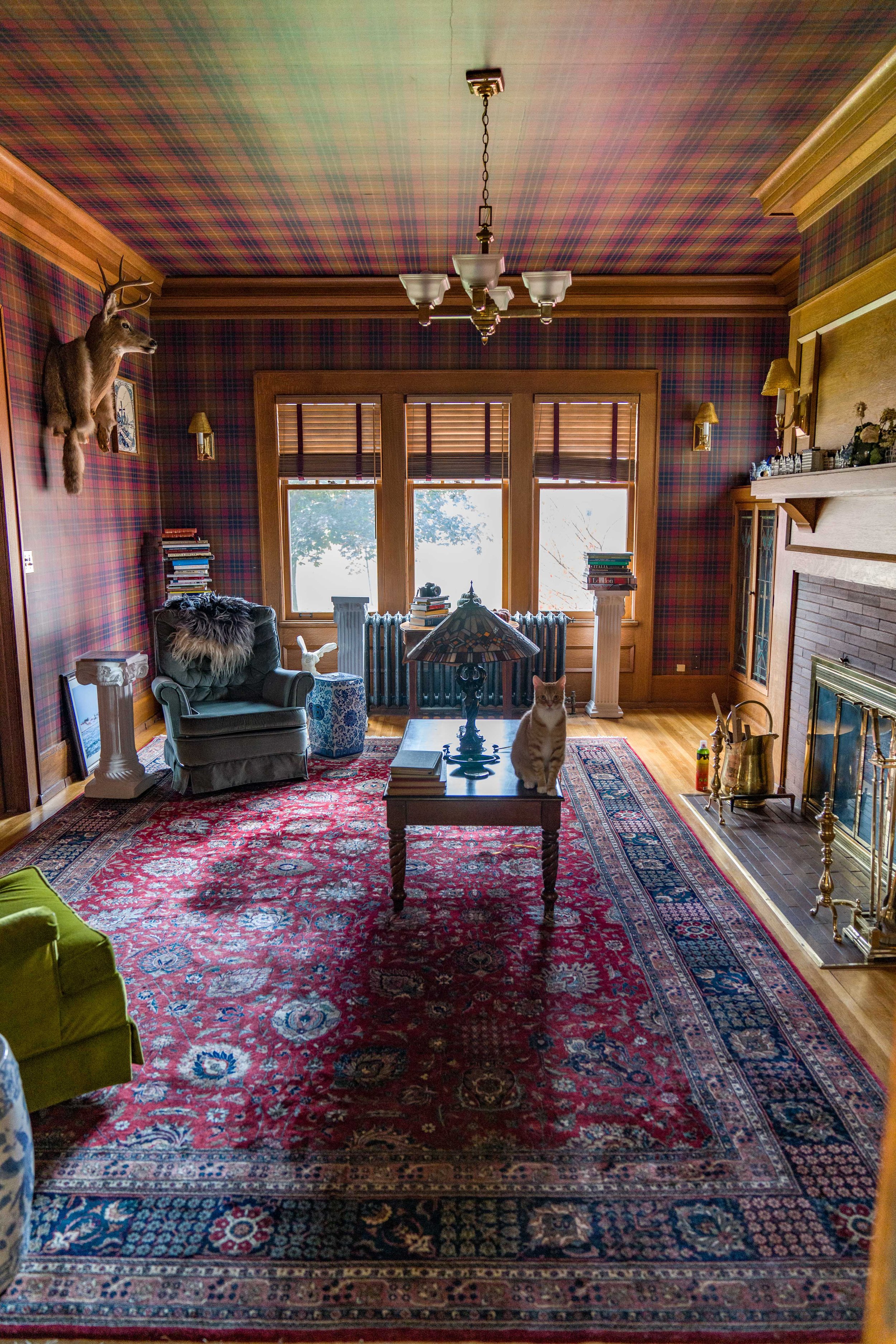
At the risk of sounding like a broken record, quality, quality, quality!! Ugh. How luxurious it is to feel the weight of a real solid wood door. To admire the sky from a stained glass window dated 1915. To watch a cat through a beveled crystal French pocket door. It is truly living. We no longer want to travel since the modern has become grotesque. Staying in hotels feels sterile, plain, and empty. The new feels plastic and fake.
Everything, or most things in the home are natural. The insulation was installed before foam. The house breathes. You can feel the difference between having solid real wood and living materials compared to the current plastic-stuffy new homes. They suffocate you with their over-insulated newness. The wood grounds you even within the home. You are a part of nature, instead of being isolated and separate from it. I will keep emphasizing the feeling. Once experienced it becomes harder and harder to accept the mediocre we call modern progress. Our “technology” for homes may be sold as energy efficient, better, who knows, but in reality, does it stand the test of time? Were people 100 years ago really so archaic that their window quality still functions?
I abhor the synthetic, the fake, the plastic. I love the natural and the real.
6. Thought out floorplan
This is a benefit I did not fully realize until we lived in the house for a little bit. There is really something to a well-designed thought-out contained floorplan. It is great to have specific designated spaces for each action. A dining room to dine, a library to read and converse, a receiving room for when guests arrive, and most importantly a tucked-away kitchen. I used to be a fan of open-plan living, but now I realize the detriment and annoyance. Having an open kitchen to a living room creates stress! If you are anything like our house the kitchen is a creative explosion. There is constantly some type of mess occurring. We eat. We cook. We have dishes that require hand washing. It is great to have a tucked-away kitchen for that very reason. You do not have to worry about guests over and them having to be a part of the kitchen chaos. It creates mystery & intrigue when hosting dinner parties. Open living floorplans are just that, open. I have come to love intentional cozy places with a specific purpose. It is wonderful to have space and privacy. After living in open apartments for many years it is a pleasure to experience rooms. Again, historic homes really considered how people live and how to best facilitate living.
7. DAILY INSPIRATION
Be it home improvement projects, or just admiring the woodwork, a house with charm has a way of inspiring. Each day I wake up and gaze lovingly at the ceiling and smile to myself whilst watching the light dance and reflect through the crystal door to the bedroom solarium. (see point 6 for bedroom solarium) It is just a delight. Never had I been delighted to wake up, but now there is a sensory feast that just provides joy and purpose. I want to care for the home, tackle the daily mundane, and stay in. I am inspired to create new projects to enhance and preserve the home. Additionally, I really love interior decorating and the canvas is so fun to work with! Each day is a new opportunity to create and each creation directly affects and enhances your quality of life.
8. Teaches Responsibility & long-term thinking
Historic homes are not a place to sit on a sofa all day watching TV kind of deal. They are higher maintenance than that. They require oil caresses yearly on their woodwork. They require diligence so that things are all in order. They have quirks you must learn and love. They have a personality that you become the caretaker of. Suffice to say, we basically jumped into the full throngs of the responsibility of first-time homeownership with gusto. There is a lot of work to do, and only personal responsibility and accountability will take care of it. If you start to slack the house will show you. This is on top of the daily typical chores. There are windows to glaze, radiators to manually monitor, storm windows to install, the list goes on.
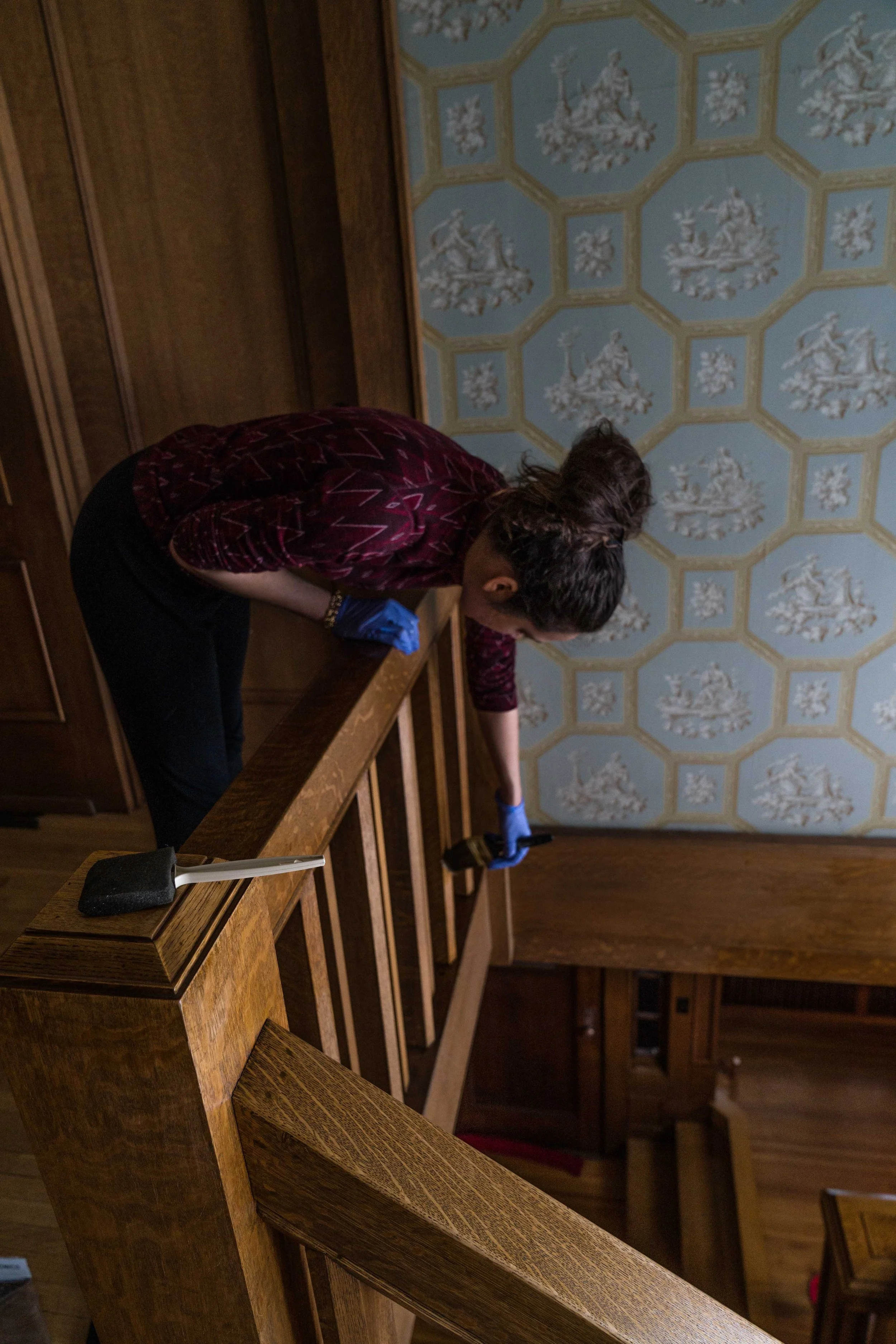
This also teaches the importance of long-term thinking and vision. We need to plan projects and the timeline to realistically achieve them We need to assess what skills we have, what we can fix ourselves, and what would need professional help. There is an ever-increasing list of projects to complete, and this teaches prioritization.
Both personal responsibility & long-term thinking are valuable life skills to learn. They have helped prepare me for motherhood, as well as set your mindset and character up for success.
The majority want quick easy fixes and convenience. They are unwilling to do the work and show up for themselves, let alone their house. They would love things to be simple, un-complex, and cheap. They lack the long-term vision and can only see immediate gratification and seek instant pleasure.
For us, we see the potential growth, the house as a fun riddle to keep learning new skills, and we welcome the hard work to fulfill our long-term vision and enhance not only our quality of life but all those we share our home with.
9. timeless
Classic refinement has eternal appeal. Ok, that may be stretching it, but look at some of the great classic art & sculpture, and compare that to the modern painting we see today. Compare fleeting fashion trends to the classic understated traditional style. Which one perseveres? Does the ranch house have a timeless appeal? How about the cookie-cutter vinyl suburban McMansion in a copy-paste cul-de-sac? What lasts? This brings us to the ubiquitous philosophical question is beauty subjective or objective? I find the modernist movement degenerate. An attack on our souls and our psyche. Purposefully grotesque and uninspiring. Architecture and art that needs to be told to us how great it is, a characterless box of concrete & glass. Rough brush strokes on canvas depicting the obscene. I truly wonder if the modern will evoke a sense of awe and wonder in the next 50 years, or will it become like the modern buildings of the 50s & 60s that painfully disturb the city-scape in any European metropolis.
I prefer the enduring. To follow what I believe is beautiful, timeless, and against the trends. It does not need to be new or flashy for me, but rather something built to last, natural, and elegant.
10. Investing in the future by preserving the past
This point has resulted after many discussions with my husband about the future and our observations about historical homes as well as the motivations of people. We have theorized that it seems like
1. people do not seem to want to do the work or invest in a “money pit”
2. Many older homes are not, “up to code” and many current contractors will want to strip and modernize historic houses.
3. The cost of labor and materials has gone up significantly combined with the lower quality of goods and continual loss of trained contractors.
These points have us conclude that there will be many homes in the future lost. Already, using New York City as an example, we have lost so many beautiful stately homes from the Gilded Age. So many have been condemned and demolished. People and city codes do not want to take on the effort to preserve. What would happen if all of these homes are lost to history?
We see a trend of these homes diminishing more and more. Within my own age group, very few can take on the time and resources needed to preserve a home. I have seen most historic homeowners are further along in life than my husband and myself. Considering the amount of physical labor and work involved I wonder if they will be able to keep up the momentum to sustain their pursuit of preservation.
It is a tough job taking on the calling of being a home steward, it is a rewarding pursuit. We believe historic homes will become more scarce over time. For us, it is not only for our personal living enjoyment, but for the future of our community, our children, and hopefully generations after us to see what once was, how it was preserved, and can be enjoyed far beyond my years on this plane. All of the families that have lived here prior to us have left their story on the walls, they live on with the house, and each has left a legacy.

Stained Glass Shadows
Historic homes are so much more than just a house. They are a museum, a sanctuary, and a way to give of yourself in a unique way that deeply enhances your life. A historic home feels like it takes it all from you, and it does, but it also gives back tenfold. Your home becomes more than a passion but a deep calling and connection to the ebb and flow of time. Your spirit infuses within the walls to co-create with those who once lived. You feel their ideas, their dreams, their ambitions, and you add your own vision to the story. If walls could talk takes on a new meaning, and you slowly piece together the ever-flowing riddle that is the house whilst also adding your own personality for the future.
To synthesize, living in a historic home is truly a gift and a blessing. I have become so enhanced in ways I never dreamed possible. To a casual onlooker or visitor to the home, it may all look easy and carefree, but they need to remember all of the labor of love involved to produce the results they see. The hours of hand oiling. Each hole in the wall is considered for the future implications of each decision. The stakes are higher yet the rewards are larger.