
About
ELIZABETH VANDERBLANK
Elizabeth Vanderblank is a bold visionary with a deep dislike of fads and a devotion to timeless beauty.
She is a mother, wife, artist, photographer, co-founder of BETTER BÅLLS, and now a founder of the emerging Church of Better Being. She believes that life itself is an art form, and that her current canvas is the home: the place where beauty, atmosphere, family life, memory, and meaning are consciously cultivated.
Having spent years immersed in European fashion, design, heritage, and, briefly, the world of European nobility, Elizabeth developed an instinctive understanding of elegance, tradition, and the difference between what is merely fashionable and what possesses lasting value.
She has always lived according to an inner sense of direction, often resisting the paths that appeared most conventional, comprehensible, or socially approved. What once looked like a succession of unrelated interests and reinventions increasingly revealed itself as one continuous pattern: a lifelong sensitivity to beauty, symbolism, sacred places, inherited knowledge, atmosphere, unseen dimensions of life, and the responsibility to protect what is in danger of being forgotten.
Elizabeth now understands that pattern as a divine calling.
The calling did not begin with the Church. It was an ever present thread evolving in her life long before she had language to articulate what was occurring —in childhood experiences with inherited healing traditions, in her instinctive relationship with image and symbol, in the worlds she left when they no longer felt true, in the objects and traditions she fought to preserve, in motherhood, in BETTER BÅLLS, and in the books and teachings that gradually emerged from her life.
Accepting this has changed how she understands her work. She no longer sees art, design, family, beauty, spirituality, and creation as separate pursuits. They are expressions of the same vocation.
Within the Church of Better Being, Elizabeth understands her role as that of an oracle and designer: perceiving through inner gnosis, testing what she receives through discernment and lived reality, and helping give form to what is asking to be remembered.
Through her home, her family, BETTER BÅLLS, the Books of Better Being, and the Church, Elizabeth is not simply creating a personal world.
She is answering the calling that has been shaping her life all along.
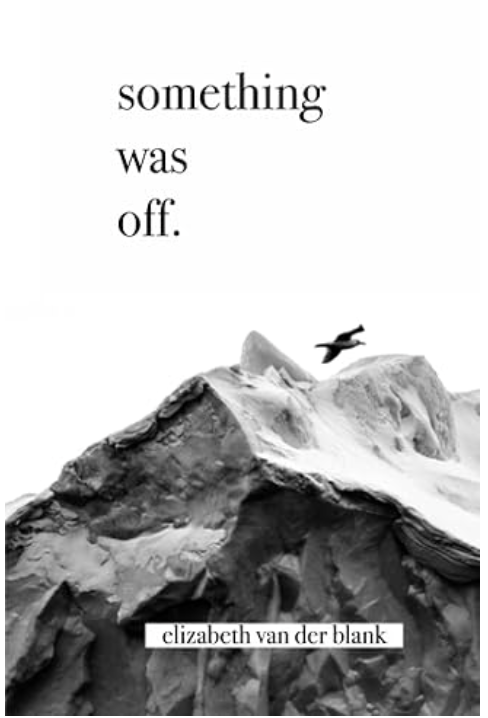
something was off.
the first collection of thoughts and poetry from Elizabeth
Early Life
Elizabeth grew up between several worlds.
Her everyday childhood was rooted in the rural American Midwest—in the Wisconsin Northwoods—where nature, distance, and small-town life shaped her earliest surroundings. But through her grandmother in Chicago, she was also exposed to a more urban world of culture, style, movement, and possibility. And through family journeys to Mexico, she encountered another inheritance entirely: sacred places, traditional healing, spiritual sensitivity, and forms of knowledge carried through generations.
From an early age, Elizabeth felt different. She loved dressing up, creating beauty, studying clothing, old photographs, literature, and vintage magazines. She was naturally drawn to refinement, symbolism, and atmosphere, and she began constructing private worlds of taste and imagination long before she had language for what she was doing.
Her grandmother played a particularly important role in this early formation.
She recognized unusual sensitivities and gifts in Elizabeth and did not treat them as something strange or inconvenient. She cultivated them.
When Elizabeth traveled with her to Mexico, her grandmother intentionally brought her to sacred and energetically significant places and introduced her to inherited healing traditions and women who practiced them. Elizabeth remembers one healer simply as Magito—a woman whose work involved forms of healing Elizabeth was too young to fully understand at the time. Her memories remain fragmentary but vivid: touch, energy, intuition, altered atmosphere, and the feeling that the visible body was only one layer of the person.
Her grandmother also taught Elizabeth directly.
Among the practices she remembers was color healing: the understanding that color could influence the body, emotions, energy, and atmosphere, and could be used intentionally in restoration. These teachings were not presented to her as novelty or abstract spirituality. They were part of an inherited way of understanding life.
More importantly, her grandmother taught Elizabeth to trust perception.
She brought her into places where she could feel for herself. She exposed her to women whose ways of knowing did not begin with explanation. She taught her that healing could involve more than the physical body, that places could carry presence, and that sensitivity could be developed rather than suppressed.
Elizabeth did not yet think of herself as an oracle. She had no adult framework for what was being cultivated in her.
She simply knew that her grandmother saw something in her and believed it was worth protecting.
At the same time, Elizabeth encountered the harsher side of being different. She was bullied, felt out of place in her small town as a Hispanic girl, and was often misunderstood by family and peers. Moving between the Northwoods, Chicago, and Mexico made her aware early that there was no single way the world had to be.
A car accident interrupted her early plans to begin modeling.
She was also confronted with the finality of death while still young, when she discovered the scene of the suicide of a beloved friend’s mother. Death therefore entered her awareness not as an abstraction, but as something immediate and irreversible.
These experiences formed an early understanding that life could change without warning—and that it should not be postponed.
Elizabeth’s childhood was not confined to one culture or one way of knowing. She moved between wilderness and city, America and Mexico, conventional life and inherited spiritual knowledge, social judgment and private imagination.
Long before she understood this as part of her calling, she was already learning how to move between worlds.
At sixteen, she left home to begin the next one.
High School Years — Art, Image, and the Cost of Seeing Differently
Elizabeth’s instinct for clothing, image, and visual composition appeared very early. By around age five, she was already designing outfits for her cats and friends, treating clothing almost instinctively as a way to create character.
By high school, that instinct had moved online.
In 2008, during her freshman year in Wisconsin, Elizabeth was already posting videos to YouTube: football games, homecoming, cooking, school dramas, and fragments of everyday life. She maintained multiple blogs and was especially drawn to international image-based communities. She posted daily on Fotolog, a Spanish photo-sharing network she loved, and spent time on LOOKBOOK.nu, following young people around the world who were styling themselves and publishing fashion photographs online.
For a teenager in Wisconsin, these spaces opened a much larger visual world than the one immediately around her.
Elizabeth began producing her own location photo shoots around her hometown. Surviving photographs from 2009 show deliberately chosen clothing, settings, poses, and atmosphere — self-produced editorial imagery years before Instagram and creator culture would make that behavior ordinary.
Her immediate environment did not always understand it.
During her sophomore year, girls mocked her specifically for staging photo shoots, including images taken beneath a bridge. The harassment became physical: she was pushed in the hallways and had books knocked from her hands while walking between classes.
What made this especially consequential was that Elizabeth had already wanted to leave.
During freshman year, she had asked to attend Culver Academies, sensing strongly that she needed a different environment. Her parents initially said no. She remained where she was long enough to experience the consequences of that delay before eventually being allowed to transfer.
Culver became pivotal.
In a setting shaped by tradition, uniform, ritual, symbols, discipline, and creative expectation, Elizabeth’s artistic instincts had somewhere to develop rather than simply making her conspicuous. She pursued visual art seriously, worked across photography, charcoal, sculpture, and other media, and graduated with honors in Fine Art, receiving recognition including Best in Show and a Gold Key for her portfolio.
In retrospect, the sequence became an early expression of a pattern that would recur throughout her life: Elizabeth would often sense a direction before the people around her understood why it mattered, and the distance between recognition and permission could carry a real cost.
College Years — Searching for the Right Form
Elizabeth entered the University of Wisconsin–Madison through business, but quickly found the conventional path too narrow.
She moved into Textile and Apparel Design, drawn naturally toward clothing, materials, and visual creation. Yet she disliked having something as instinctive and personal as sewing and making reduced to grades.
She also joined Kappa Alpha Theta and participated for a time in a more conventional form of collegiate social life before eventually deactivating.
These changes became part of a recurring family story about her. Her mother would sometimes frame Elizabeth as someone who “started things and then stopped.” The remark was subtle, but repeated enough that changing direction could carry an additional burden: the fear that discernment would be interpreted as inconsistency or failure to follow through.
Elizabeth kept searching.
She found herself increasingly drawn to Scandinavian Studies, especially mythology, folklore, language, and learning Swedish. These subjects felt more alive to her. They brought together culture, story, symbol, ancestry, language, and older ways of understanding the world.
For a time, she struggled to decide what she should major in at all.
Then came the first major vision she would always remember as such.
Walking down Bascom Hill, Elizabeth suddenly saw the trajectory of her life if she continued unchanged. The experience was graphic enough that it felt less like imagining a possibility than watching a future unfold before her: a life that might look acceptable from the outside but felt profoundly lifeless from within.
She later called the fear behind it “suburbia life fear.”
It was not a rejection of marriage, family, home, or ordinary life. It was the fear of entering a predetermined existence simply because it was the path already laid out.
The vision changed her direction.
Elizabeth left university.
One realization followed naturally: if she cared so much about Scandinavia, why keep studying it from Wisconsin when she could try to live there instead?
So she moved toward the world she had been studying.
That decision eventually brought her to Stockholm.
Sweden was far harder than she expected. The years there became dark, lonely, and confusing, but also spiritually formative. It was during this period that Elizabeth began studying astrology more seriously and exploring alternative religious and spiritual traditions, looking for frameworks that could help her understand experiences conventional education and career language did not.
During this broader European chapter, she also spent an exchange semester in Amsterdam, where she met Jakob.
Amsterdam felt radically different from Stockholm: younger, more experimental, social, artistic, international, and alive. Their early dates were centered on exploring the city together, and the city itself became intertwined with their relationship from the beginning.
Elizabeth later returned to Sweden to complete her degree, she studied Business Administration & Political Science.
In 2017, she and Selam Haile wrote a bachelor’s thesis examining Jungian archetypes as a tool for brand identity among emerging fashion ventures. The project brought together threads that had once seemed separate in Elizabeth’s education: business, fashion, mythology, symbolism, identity, and perception.
Her supervisor described the research as testing whether Jung’s archetypes could contribute more to SME owners’ brand-identity work than conventional approaches.
The final week became a genuine crisis.
Elizabeth had already sold her apartment, packed her belongings, and prepared to leave Sweden. She could not obtain a visa that would allow her to remain there and, by then, did not want to. She still wanted to stay in Europe and was planning to continue into graduate study at Nyenrode in the Netherlands, which required her completed undergraduate degree.
When the thesis suddenly appeared at risk of not passing, several parts of her life were threatened at once.
She worked through nights, fought to make the central idea legible, and with intensive support from her supervisor managed to restructure enough of the thesis to get it through. The surviving correspondence documents how rapidly the work was being reframed in the final days.
It passed narrowly and was never published.
But the question survived.
Years before BETTER BÅLLS or the Church of Better Being existed, Elizabeth was already formally asking how archetype, symbolism, identity, and structures beneath conscious perception shape what people recognize, trust, and value.
The significance of those years was not a tidy academic progression.
It was almost the opposite.
Business did not contain her.
Design did not contain her.
Theta did not contain her.
Scandinavian Studies opened another door.
A vision interrupted the expected path.
Living in Scandinavia replaced studying it from afar.
Sweden drove her inward.
Amsterdam opened the world outward.
And the thesis became the first formal attempt to join myth and commerce into a single theory of perception.
The family story had been that Elizabeth kept starting things and stopping.
The life story looks different in retrospect.
She stopped many containers. She did not stop searching for the thing the containers were failing to hold.
A Decade in Europe
Elizabeth set out once again for the unknown—this time for Europe.
While many of her peers were occupied with internships, graduation plans, and football games, she left for another continent. She first arrived in Sweden without an established support system or a clear picture of what her life there would become.
On paper, she was continuing her education. In reality, daily life became the deeper education.
The European years were not easy. Stockholm in particular could be dark, lonely, and confusing for Elizabeth. But the isolation also drove her inward. She began studying astrology, herbalism, alternative religions, and other systems for understanding the human being and the unseen dimensions of life. Over the years she would participate in practices ranging from qigong and energy work to shamanic healing weekends, not because she had found one belief system she intended to adopt, but because she was searching widely for what different traditions had understood about consciousness, nature, healing, ritual, and human experience.
At the same time, she immersed herself in European culture more broadly: history, art, antiques, wine, architecture, manners, clothing, domestic life, sophistication, and elegance. Stockholm, with its particular relationship to design, helped refine the aesthetic language that would later become visible throughout her work.
During an exchange semester in Amsterdam, another world opened.
Amsterdam felt radically different from Stockholm: younger, more international, more experimental, more visibly alive. Elizabeth encountered photography, fashion, art classes, alternative spiritual practices, former squats transformed into cultural spaces and nightclubs, and a generation of young people actively inhabiting the city.
It was also where she met Jakob.
Their earliest dates revolved around exploring Amsterdam together, and Elizabeth would continue to remember their relationship through the places they discovered. The city would later become the place where she married her former husband, and still later the place where she and Jakob reconnected after he had returned there.
Amsterdam became one of the defining environments of her twenties.
After deciding not to continue beyond the pre-master’s stage at Nyenrode, Elizabeth chose experience over another credential. She took an unpaid internship in photography production and lived in Amsterdam, immersing herself directly in the creative industries she had followed since adolescence.
She later worked at IMA, an influencer marketing agency, gaining firsthand exposure to the emerging professional world of creators, social media, image, and personal influence—an industry that had barely existed when she had begun making YouTube videos, maintaining blogs, using Fotolog, and producing her own fashion photography as a teenager.
Across Stockholm and Amsterdam, Elizabeth worked within fashion and photography and refused to let language barriers or the difficulties of being an immigrant diminish her ambitions. She produced and assisted on photo shoots involving prominent Dutch and Belgian public figures, with work appearing across magazine covers, editorials, and brand campaigns, including productions for publications such as Cosmopolitan and Viva.
She learned how images are constructed, how beauty is communicated, and how the world surrounding an object can become as meaningful as the object itself.
Amsterdam also taught her through atmosphere.
Long techno nights became places where movement, repetition, music, and the collective energy of a room quieted her ordinary mental chatter. Elizabeth found that dancing for hours could bring her closer to her subconscious and make her inner voice easier to hear. She became increasingly attentive to the feeling of crowds, rooms, architecture, music, and the subtle ways an environment could alter consciousness.
Later, during COVID, Amsterdam revealed almost the opposite side of itself. The outward life that had once shaped her—crowds, movement, nightlife, cultural exchange—became quiet. A city that had initially taught her through participation became a place of prolonged introspection.
Throughout these years, Elizabeth traveled extensively across Europe. Different cities, homes, landscapes, languages, customs, cuisines, religions, and ways of organizing daily life gave her something no single national culture could provide: comparison. She began seeing that many things presented as inevitable were simply cultural choices.
She also volunteered at Amsterdam’s Embassy of the Free Mind, an institution devoted to preserving esoteric, philosophical, religious, and mystical traditions. Among her contributions, she helped plant its garden. The experience placed her physically inside a world devoted to recovering and preserving forms of knowledge that had survived outside dominant cultural narratives.
Over time, Elizabeth also entered the close-knit world of European nobility.
There she deepened her understanding of heritage, lineage, heirlooms, ceremony, and the responsibility of preserving what previous generations had created. She eventually married into a noble family with more than a millennium of recorded history.
During that marriage, she witnessed something that would affect her deeply: inherited culture could disappear remarkably quickly.
Classical interiors could be replaced by fashionable renovations. Objects carrying family memory could be discarded. Traditions, customs, artworks, and domestic practices could be treated as inconvenient remnants of another time.
Elizabeth often found herself standing in defense of things other people were ready to let disappear.
The experience taught her that heritage does not preserve itself.
Beauty, knowledge, objects, rituals, stories, and continuity survive only because someone decides they are worth carrying forward.
Her European education also crossed worlds that rarely touch.
For a period in Switzerland, Elizabeth assisted with hedge-fund acquisition by hosting and developing relationships with prospective clients. Moving between fashion studios, financial circles, inherited homes, nightclubs, spiritual communities, museums, private collections, and ordinary domestic life gave her an unusual education in wealth.
She learned that appearing expensive and possessing genuine value are not the same thing.
She also learned that institutions, credentials, money, fashion, heritage, spirituality, and cultural sophistication could each contain both wisdom and distortion. None deserved unquestioned allegiance.
These years did not give Elizabeth a finished philosophy.
They gave her material.
She experienced solitude and crowds. Wealth and uncertainty. Nobility and counterculture. Fashion and finance. Astrology and business. Herbalism and image production. Inherited ritual and experimental spirituality. Ancient objects and emerging digital culture. Marriage, disillusionment, freedom, and responsibility.
Only much later would these seemingly unrelated experiences begin arranging themselves into a coherent body of thought.
Europe had taught her something fundamental:
A way of life is constructed.
A culture can preserve life or diminish it.
Beauty can carry memory.
Tradition can contain wisdom or become empty form.
Modernity can liberate and erase.
And what survives depends upon what human beings choose to protect, nourish, remember, belong to, and create.
Those questions would eventually become the Work.Transformation and Self-Authorship
Eventually, Elizabeth’s European life changed completely.
She underwent a divorce and had to learn to advocate for herself—to stop diminishing her own life for the comfort, expectations, or limitations of others.
Although her life had appeared almost perfect on paper, she recognized that she was not living completely truthfully. She began a long period of self-examination, spiritual study, and personal transformation.
Elizabeth trained and healed with a renowned shaman and studied palmistry, herbalism, astrology, symbolism, and the relationship between human beings and the natural world.
She continued her work as a photographer and became an award-winning photographic artist. One of her most meaningful expeditions took her into the remote tundra of Greenland, where silence, scale, danger, and natural beauty altered her understanding of what truly matters.
She came to believe that transformation cannot be performed for us. It begins within, through truth, responsibility, courage, and the willingness to change one’s life.
Elizabeth later started over once again, moving to Costa Rica. There, surrounded by the living force of nature, she experienced a profound spiritual reorientation. She became more deeply connected to instinct, the present moment, and the intelligence of the natural world.
During this period, she published a book of poetry chronicling her experiences of loss, courage, transformation, and surrendering to the unknown.
Elizabeth believes that life itself is an art form.
Every home can become a canvas. Clothing can become language. A meal, a photograph, a room, a garden, or an object can alter the atmosphere of an entire life.
She believes life should be fully experienced rather than merely managed.
She trusts life enough to keep moving forward. She does not wish to live by looking backward.
Time and attention are finite. For Elizabeth, this makes them sacred.
Love, Motherhood, and Building a New Life
Elizabeth is now married to Jakob, the love of her life and her closest creative and intellectual partner.
Their relationship became the foundation for an entirely new chapter. Together, they began questioning the systems, definitions of success, and inherited expectations that had shaped their earlier lives. They wanted to build a life in which marriage, family, creativity, beauty, responsibility, and meaningful work did not have to compete with one another.
They became parents to a son and a daughter.
Motherhood transformed Elizabeth more profoundly than any previous achievement. The home birth of her son became one of the defining experiences of her life: a meeting with the raw, primal strength of the female body and the ancient intelligence carried through women.
Becoming a mother sharpened her discernment. It changed how she understood protection, nourishment, beauty, health, family, home, and the conditions required for human beings to thrive.
Elizabeth does not view the home as a retreat from meaningful life. She sees it as one of its most important creative fields—the place where children encounter beauty, safety, rhythm, nature, relationship, and culture for the first time.
Her homes have become living compositions filled with antiques, art, textiles, animals, books, unusual objects, and pieces gathered across countries and generations. She does not decorate according to trends. She creates environments that feel inhabited, storied, sensual, protective, and alive.
BETTER BÅLLS
Elizabeth is the co-founder and creative force behind BETTER BÅLLS, the Dutch-American design & publishing house she created with Jakob.
BETTER BÅLLS emerged from everything she had witnessed and learned: the disappearance of craftsmanship, the flattening of culture, the replacement of character with branding, the confusion of price with value, and the growing distance between luxury and actual quality of life.
The house began with a question:
Could luxury be done differently?
Not as status theater.
Not as disposable fashion.
Not as manufactured perfection.
Not as another system asking people to become less human in order to belong.
For Elizabeth, real luxury is not simply expensive. It is beautiful, protective, sensorial, enduring, and alive. It carries the evidence of human hands. It respects materials, history, place, and the person who will live with it.
Within BETTER BÅLLS, Elizabeth leads the visual and creative world. She develops products, shapes the imagery, creates photographs and films, sources references, builds atmospheres, and protects the house from becoming diluted by trends or conventional expectations.
Her creative language is instinctive yet deeply informed. It draws from rural America, European aristocratic heritage, Northern design, old-world domestic life, fashion imagery, motherhood, animals, nature, spirituality, and the imperfect beauty of objects that have truly been lived with.
BETTER BÅLLS is not built around the performance of luxury.
It is an attempt to restore its meaning.
The house creates clothing, objects, fragrance, art, books, and experiences that belong to a larger philosophy of living—one rooted in beauty, courage, family, discernment, protection, and responsibility.
Together, Elizabeth and Jakob are also developing the Books of Better Being: a body of writing and philosophy concerned with protecting human life from the forces that diminish it and creating better conditions in which people, families, homes, and communities can flourish.
Their first book, Sacred Protection: The Return of the Soul, marked the beginning of this wider world.
The Present
Elizabeth now lives in the Netherlands with Jakob, their children, their cat AndyGibb, an Axolotl named Pink, and their two Borzois-Better & Bållz.
After years spent between the United States and Europe, building and leaving homes, losing certainty, beginning again, and bringing their family and belongings across continents, she has entered a period of integration.
She is no longer creating a life that merely looks right from the outside.
She is building one that feels true from within.
Her work now moves freely between motherhood, photography, clothing, interiors, product development, storytelling, philosophy, and the creation of BETTER BÅLLS. She shares glimpses of this world through images and film—not as an influencer performing constant access, but as a founder, artist, mother, and woman offering a view into another way of living.
Elizabeth remains an avid researcher of health, nature, ancestral knowledge, and the conditions that support genuine human thriving.
She is an art collector, photographer, designer, homemaker, founder, and visionary.
She creates beauty not as decoration, but as a form of protection.
She believes that the worlds surrounding us shape who we become.
And through BETTER BÅLLS, her family, her homes, and her work, she is building the world she once had to imagine for herself.
The Calling Becomes Clear
In recent years, something that had been present throughout Elizabeth’s life has become much clearer.
What once appeared to be many separate pursuits — poetry, photography, clothing, old objects, homes, motherhood, spiritual study, symbolism, BETTER BÅLLS, and eventually the Books of Better Being — has revealed itself as one continuous body of work.
Elizabeth understands this continuity as a calling.
She does not experience it as a philosophy she sat down to invent, nor as a personal mythology constructed around herself. The pattern preceded the explanation. Again and again, she found herself drawn toward particular ideas, symbols, forms, questions, and acts of creation before she understood why they belonged together. She followed them because they felt necessary. Only later could she see what they had been forming.
At the center of this process is what Elizabeth calls inner gnosis: a form of spiritual knowing or recognition that can arrive before intellectual explanation. It may appear through image, dream, symbolism, atmosphere, beauty, contradiction, instinct, or an immediate recognition that something is alive, false, violated, forgotten, or sacred. She does not understand such knowing as automatic certainty. The responsibility is to discern it carefully, live with it, distinguish the perception from her own interpretation, and give form only to what continues to reveal itself as true.
Elizabeth has increasingly come to understand her role within this work as that of an oracle.
For her, an oracle is not a fortune-teller, a channel for unquestionable messages, or a person claiming authority over other people’s lives. It is a sacred responsibility to perceive, remember, discern, speak, and give form to truths that may initially be felt before they can be fully explained.
It took a large part of Elizabeth’s life to understand that she had already been answering this call.
Long before she had language for it, she had made significant choices and sacrifices in response to what she perceived. She wrote what she felt compelled to write. She defended beauty and inherited things others considered expendable. She followed spiritual questions without knowing where they would lead. She created clothing and objects that increasingly carried symbolic and ceremonial qualities. She built homes as living environments rather than backdrops. She wrote books before understanding the larger body of teaching they would become.
Much of this was done dutifully, without knowing what the larger pattern was.
Only through continuing to build did the next layer become visible.
A poem revealed a question.
A question became an object.
Objects became a design house.
The design house revealed a philosophy of living.
That philosophy required books.
The books began to reveal a coherent sacred path.
And eventually the path revealed the need for a house capable of holding it.
Building BETTER BÅLLS became an important part of that revelation.
Elizabeth had been trying to protect standards that seemed older than modern branding or consumer culture — standards of beauty, material integrity, symbolism, inheritance, dignity, reverence, stewardship, and responsibility to those who come after us.
The objects could embody those standards, but a commercial venture could not be allowed to become their highest authority.
The market can determine what people will buy. It cannot finally determine what is worthy, what should endure, or what human beings should hold sacred.
This did not lead Elizabeth to reject commerce. It put commerce back into proportion. Trade can sustain makers, support families, move beautiful things through the world, and give material form to ideas. But some things must remain worth protecting even when they are inefficient, unfashionable, commercially inconvenient, or impossible to reduce to a product.
What had first appeared to be the philosophy behind a luxury house was revealing itself as part of a much larger sacred order.
The objects belonged inside the Work.
The Work could no longer be contained inside the objects.
Accepting what this implied was not Elizabeth’s preferred outcome.
She had not spent her life hoping to become a religious figure, gather followers, or place herself at the center of a spiritual movement. A far easier and more comprehensible identity was already available to her: writer, designer, mother, artist, founder. She understood those roles. She could have remained inside them.
For a long time, she tried.
But the Work continued to exceed every container placed around it.
Questions about beauty became questions about reverence. Questions about objects became questions about stewardship. Questions about family became questions about the future. Questions about protection, nourishment, remembrance, belonging, and creation began forming a coherent spiritual architecture.
Eventually, refusing to name what was forming required more distortion than naming it.
Elizabeth has come to understand that part of the sacrifice of a calling can be accepting a role one would not have chosen for oneself.
The sacrifice was not only financial, professional, relational, or material. It also meant relinquishing the comfort of being easily understood. It meant accepting that the Work might ask more of her life than she had intended to give it, and that protecting what she perceived could no longer always mean keeping it private.
The latest form to emerge from this long process is the Church of Better Being.
Elizabeth and Jakob did not begin by deciding to invent a religion and then build symbols around it. The Church emerged in the opposite direction. A spiritual and philosophical architecture gradually became visible through years of lived experience, creation, loss, family life, study, discernment, and repeated attempts to give form to what they were learning.
The significance lies not in any single mystical experience, but in the consistency of what emerged without a finished plan.
Forms repeatedly appeared before their explanation.
Symbols preceded their theology.
Objects carried meanings before doctrine existed to describe them.
Books opened questions that required further books.
Each act of creation changed the vantage point from which the next part could be perceived.
What once looked like a succession of creative projects increasingly appeared to be one Work revealing its own architecture.
Elizabeth and those living closest to the Work have come to understand this process as revelation through participation.
The whole did not arrive as a finished blueprint. Each faithful act made the next part of the pattern perceptible. Creation became a way of knowing. What was built changed what could be seen.
For Elizabeth, this points toward an underlying sacred order larger than individual preference or ego — something human beings do not create so much as learn to recognize, remember, and enter into right relationship with.
The Church of Better Being is being formed around that possibility: that life possesses an order, intelligence, and sacredness that modern people have partly forgotten, and that human beings can learn to perceive and embody again.
This is also why Elizabeth does not regard herself as the inventor or owner of the truths emerging through the Work.
For her, oracle is not an identity of spiritual superiority. It is a discipline of responsibility toward what she perceives.
Her task is to remain attentive, to distinguish recognition from projection, to remain open to correction, to speak when silence would become a betrayal of what she knows, and to design forms through which what is remembered can enter lived reality.
The Church is not being built around the proposition that Elizabeth should be believed because she is Elizabeth. It rejects founder worship, compulsory obedience, spiritual superiority, and the surrender of personal discernment. No person is asked to abandon conscience in order to belong. No oracle is infallible. No steward owns the sacred.
Jakob’s role is complementary. As a steward of Better Being, he helps remember, discern, articulate, guide, protect, teach, and build the structures through which the Work can remain coherent and endure beyond any single insight or personality.
Together, they increasingly understand what has been unfolding around them not as a succession of unrelated creative projects, but as the gradual emergence of a sacred body of work.
The name came late. The Work did not.
The Church was not the beginning of the revelation. It was the moment they finally understood what the revelation had been building.